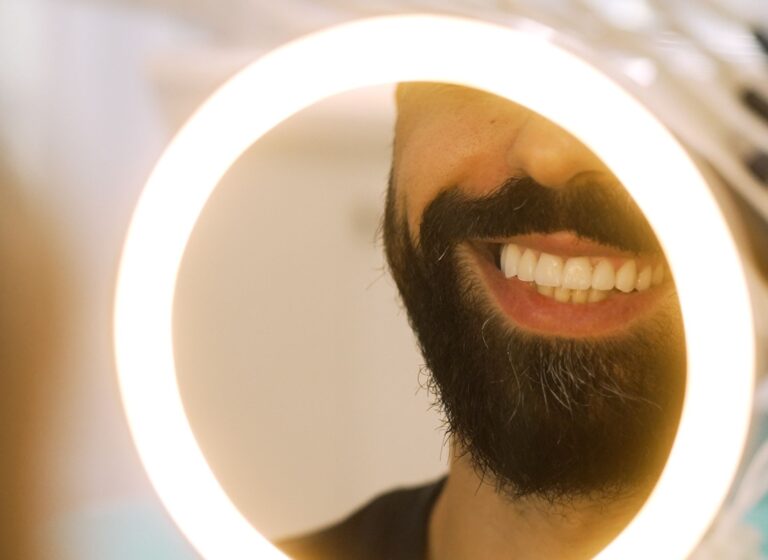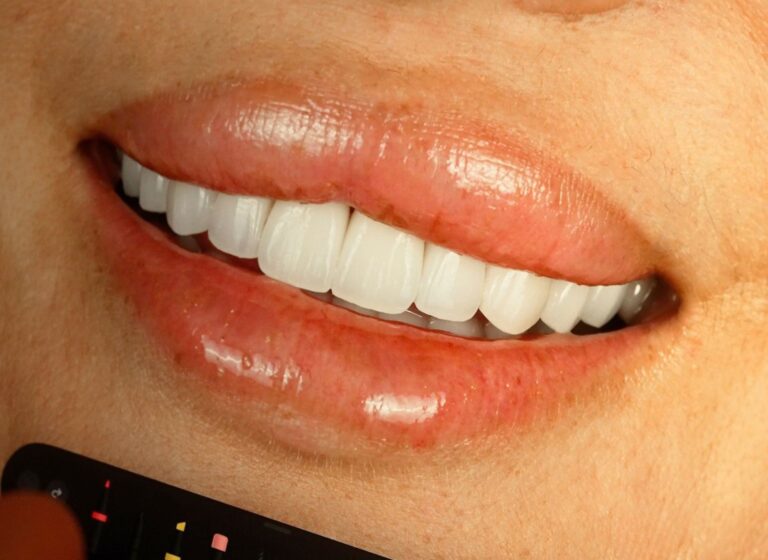
When thinking about a Hollywood Smile, colour is often the first detail that comes to mind. Yet Tooth Shape can have an equally important influence on how a smile looks and how naturally it fits the face. Two smiles with exactly the same tooth shade can create completely different impressions simply because the length, width, contours and edges of the teeth are different.
At Dr. Ali Khodr in Dubai, smile design starts by looking beyond individual teeth. Facial proportions, lips, gums, bite, existing teeth and the patient’s expectations all need to be considered before defining an aesthetic plan. Rather than choosing a tooth shape from a catalogue and applying it to every patient, the objective is to design proportions that belong naturally to that particular face. This personalised approach is especially important when planning a Hollywood Smile with veneers, crowns, composite restorations or a combination of aesthetic treatments.

What is Tooth Shape and why does it matter in a Hollywood Smile?
Tooth Shape describes much more than whether a tooth appears square, oval or rounded. It includes its width-to-length ratio, contours, corners, incisal edges and relationship with neighbouring teeth. Even subtle variations can change the character of a smile. Straighter lines and more defined angles may create a stronger visual presence, while softer transitions and rounded corners can produce a gentler appearance.
The central incisors are particularly influential because they occupy a prominent position when we smile and speak. Their dimensions establish an important reference for the lateral incisors and canines, but a natural smile does not require every visible tooth to have exactly the same dimensions or outline. In fact, appropriate differences between teeth help create depth, rhythm and individuality.
This is why choosing the right Tooth Shape is an important part of a Hollywood Smile. The objective should not simply be to make teeth perfectly uniform. Harmony between shape, proportions, gums and facial features is more important than following a single aesthetic model. Before changing tooth shape, oral health must also be assessed: healthy teeth and gums remain the foundation of any aesthetic treatment.
How do you choose the right Tooth Shape for your face?
A common online search is which tooth shape is best for a round, square, oval or heart-shaped face. Facial shape can certainly provide useful information during smile design, but it should not be treated as a fixed formula. Two people with similar facial outlines can have completely different lips, smiles, tooth display, gum levels and personal preferences.
For example, rounded contours can sometimes soften a smile with stronger facial lines, while slightly more defined or elongated teeth may add structure to softer facial features. However, these are design considerations rather than universal rules. The dentist must look at the entire face and, importantly, observe it dynamically. A smile is seen while speaking, laughing and moving, not only in a static photograph.
Other characteristics can be just as important as the basic face shape. Lip volume and movement, smile width, the amount of tooth visible at rest and the relationship between the upper teeth and lower lip can all influence the design. This is why copying the tooth shape of a celebrity or choosing veneers purely from an online image is unlikely to provide a reliable guide for your own smile.
What are the most common tooth shapes for a Hollywood Smile?
Patients researching veneers and Hollywood Smile treatments often encounter terms such as square, oval, rounded, rectangular or soft-square teeth. These descriptions are useful for communicating an aesthetic direction, but they are only a starting point. Within each category, small changes to corners, length and surface contours can substantially change the final appearance.
A simplified way to understand the main aesthetic directions is:
- Square or defined shapes: straighter contours and more pronounced angles can create a structured appearance.
- Oval or rounded shapes: softer corners and transitions can create a gentler visual effect.
- Soft-square shapes: combine defined proportions with softened corners for a balance between the two.
The final smile normally involves more nuance than selecting one of these labels. Central incisors, lateral incisors and canines have different roles, and reproducing exactly the same shape across all visible teeth may create an overly uniform result. Natural-looking smile design includes controlled variation, while maintaining symmetry and proportion where appropriate.
The right solution therefore depends on the patient’s existing anatomy and aesthetic goals. Rather than asking which tooth shape is universally the most attractive, it is more useful to ask which design integrates naturally with your individual features.
How do tooth size and proportions affect a Hollywood Smile?
Shape cannot be separated from size. A tooth may have attractive contours on its own but still look disproportionate if it is too wide, too narrow, too short or too long in relation to the rest of the smile. During a Hollywood Smile assessment, we therefore consider both the individual dimensions of each tooth and the proportions across the smile.
The amount of tooth visible when the lips are relaxed or when smiling is particularly relevant. Lengthening the front teeth can change the smile line, while modifying their apparent width can alter the overall balance of the dental arch. Lateral incisors and canines must then relate naturally to the central incisors rather than appearing as identical copies.
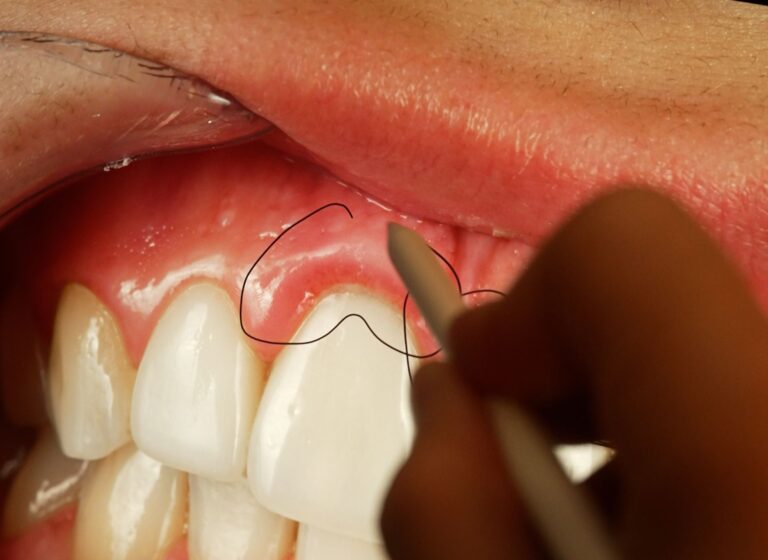
Gum levels also affect perceived tooth size. A tooth may appear short not because the tooth itself is too small, but because of the relationship between the tooth and gum tissue. For this reason, gum health and gingival architecture must be evaluated before aesthetic changes are planned. Depending on the individual situation, a Hollywood Smile can involve veneers, crowns, composite restorations, gum contouring, whitening or other treatments rather than one standard procedure for everyone.
Can Digital Smile Design help you choose your Tooth Shape?
One of the difficulties patients face when choosing a new smile is imagining how a proposed tooth shape will actually look on their own face. A photograph of someone else’s veneers can provide inspiration, but it cannot show how those same proportions would interact with your lips, facial features and existing smile.
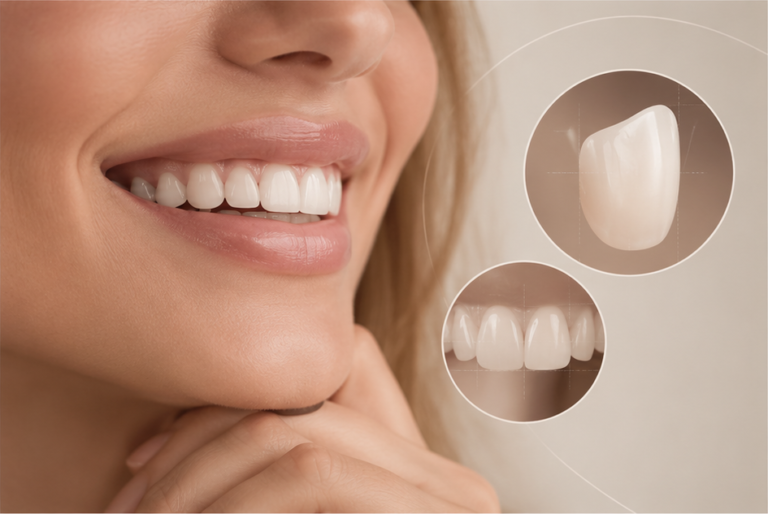
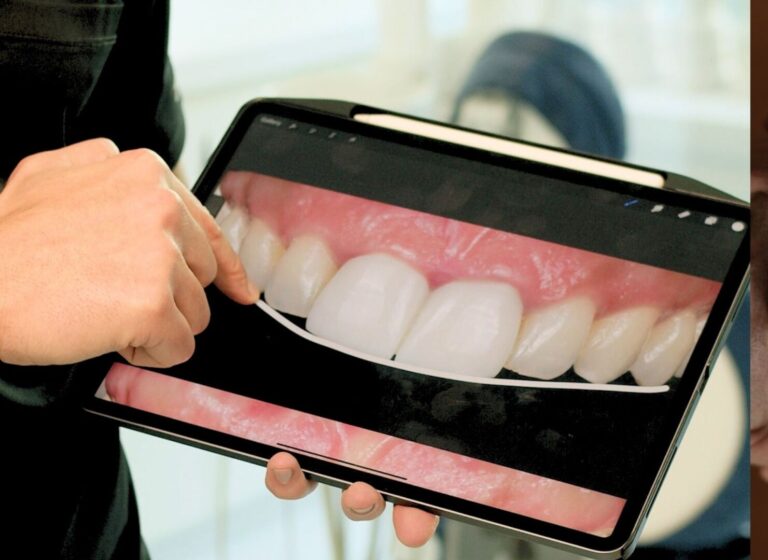
At Dr. Ali Khodr, Digital Smile Design is used to personalise aesthetic planning and help patients visualise proposed changes before proceeding with treatment. Digital information can be combined with photographs, scans and clinical evaluation to study tooth proportions and the relationship between the teeth, gums, lips and face. This makes the planning process more understandable and allows aesthetic preferences to be discussed more precisely.
A preview is particularly useful when a patient is deciding between a softer or more defined design, different tooth lengths or changes in overall proportions. Instead of simply saying “I want natural teeth” or “I want a Hollywood Smile,” the patient and dentist can discuss specific visual characteristics. Digital planning does not replace clinical judgement, however. Bite, tooth structure and gum health remain essential considerations, because the final design must work biologically and functionally as well as aesthetically.
Should a Hollywood Smile have perfectly symmetrical teeth?
Symmetry is closely associated with aesthetic dentistry, but perfect duplication of every tooth is not necessarily the objective. Natural smiles contain subtle variations. The two central incisors may provide an important visual anchor, while lateral incisors and canines contribute different shapes and proportions to the smile. If every tooth has precisely the same width, length and contour, the result can sometimes appear excessively uniform.
The aim is therefore visual balance rather than mathematical sameness. Significant asymmetries may be addressed when they interfere with the desired result, but small individual characteristics can help preserve personality. Tooth texture, translucency, edge design and the way light interacts with the surface also contribute to how natural a restoration appears.
The gums are equally important. Even beautifully shaped restorations can appear unbalanced if the surrounding tissues are unhealthy or their relationship with the teeth has not been considered. This reflects an important principle in Dr. Ali Khodr’s approach: aesthetic planning should respect the health of the teeth and gums. Tooth Shape is one part of the overall composition rather than an isolated cosmetic choice.
Does Tooth Shape influence how natural veneers look?
Yes. Veneers can change several visible characteristics of a tooth, including its shape, apparent dimensions and colour. However, creating natural-looking veneers involves much more than choosing a white shade. Shape, translucency, surface characteristics and proportions must work together, while the restoration margins need to respect the surrounding tooth and gum tissues.
A common concern among patients considering a Hollywood Smile is ending up with teeth that look too large, too uniform or disconnected from their face. Careful planning helps avoid this one-size-fits-all effect. The design should take into account the patient’s natural dental anatomy and determine what actually needs to change rather than automatically altering every characteristic.
Material selection is also personalised because different clinical situations have different requirements. At Dr. Ali Khodr, collaboration with the dental laboratory supports control over the aesthetic design and execution of veneers. Most importantly, appearance should never take priority over gum and tooth health. The objective is a smile in which restorations integrate with the mouth rather than simply creating an immediately noticeable cosmetic effect.
Can you copy someone else’s Tooth Shape for your Hollywood Smile?
Celebrity smiles and before-and-after photographs are often used as inspiration, and showing examples can be helpful when explaining what you like. However, directly copying another person’s teeth is not a reliable way to design your own smile. The same Tooth Shape can look very different on two different faces because facial proportions, lips, gum levels, dental arch, bite and natural tooth positions are different.
Instead of asking for an exact copy, it is more useful to identify what attracts you to a particular smile. You may prefer softer corners, more prominent central incisors, a broader smile, slightly longer teeth or a less uniform appearance. These preferences can then become part of a personalised discussion rather than a template to reproduce.
DIY veneers, removable cosmetic covers and attempts to reshape teeth at home should also be avoided. Changing dental anatomy requires an understanding of enamel, bite and oral health, and irreversible modifications should never be attempted without professional assessment. A Hollywood Smile should begin with diagnosis and planning, followed by the most appropriate treatment for the individual patient rather than by reproducing an image found online.
Tooth Shape and Hollywood Smile: finding the right balance
Choosing the right Tooth Shape for a Hollywood Smile is not about finding one universally perfect form. Square, oval, rounded or soft-square descriptions can help communicate preferences, but the final design needs to belong to the individual patient. Facial proportions, lips, tooth display, gums, bite, existing teeth, colour and personal expectations all contribute to the decision.
Digital Smile Design can make this process easier to understand by allowing proposed aesthetic changes to be visualised and discussed before treatment. At Dr. Ali Khodr, smile design combines this digital planning with careful clinical evaluation and attention to the health of teeth and gums. The aim is not to impose the same Hollywood Smile on every patient, but to understand which proportions and characteristics can create a balanced, personalised result while respecting oral health.