Oral health depends on much more than keeping the visible surfaces of the teeth clean. The gums and the structures supporting each tooth play an equally important role, while bacterial deposits that accumulate every day can influence both dental and periodontal health. At Dr. Ali Khodr in Dubai, hygiene and prevention are considered part of a broader approach that combines daily plaque control, professional cleaning and assessment of the tissues surrounding the teeth. Understanding how these elements are connected can help patients recognise why prevention remains important even when there is no pain or obvious dental problem.
For patients looking for information about Dental Hygiene and Periodontology in Dubai, many unfamiliar terms can appear during a dental examination or professional cleaning. Dental Biofilm, tartar, periodontal pockets and periodontal maintenance describe different aspects of oral health, while technologies and procedures such as GBT, Airflow and scaling have specific purposes. Knowing what these terms mean also helps explain the difference between routine prevention and the management of an established periodontal condition.
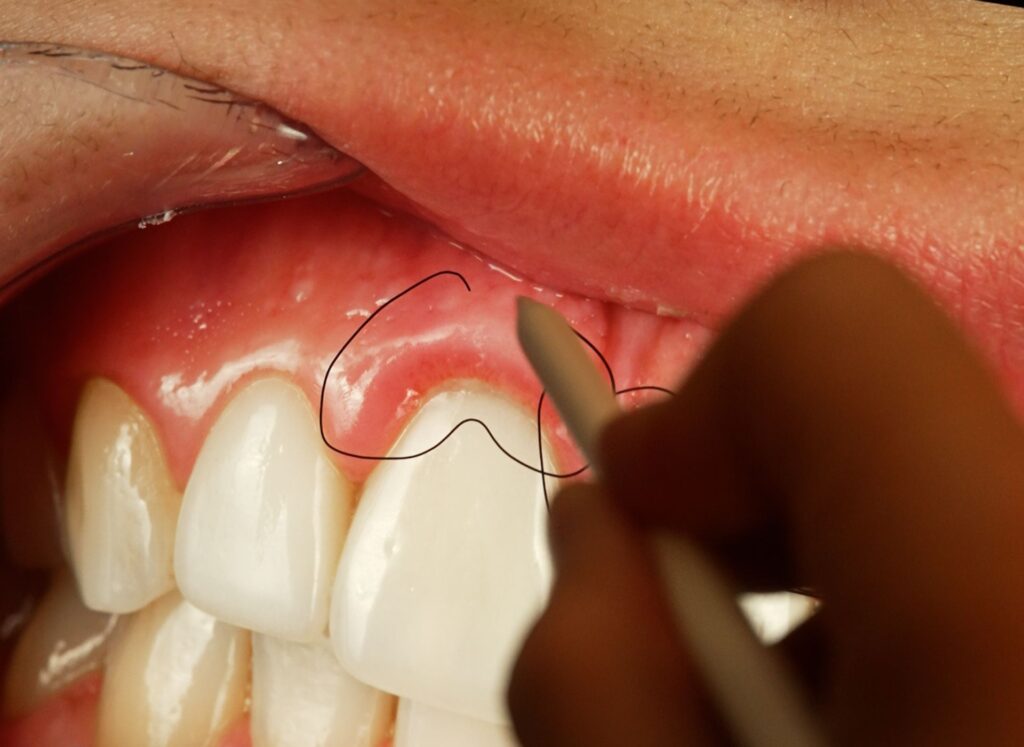
What do Dental Hygiene and Periodontology in Dubai involve?
Dental hygiene and periodontology are closely connected, but they do not describe exactly the same thing. Dental hygiene focuses strongly on controlling bacterial deposits and supporting prevention, whereas periodontology concerns the Periodontium, the group of tissues that surround and support the teeth. These include the gums, periodontal ligament, cementum covering the roots and the supporting alveolar bone.
This relationship explains why professional hygiene is not simply a cosmetic procedure intended to make teeth look cleaner. Dental Plaque continuously develops on dental surfaces and around the gumline. If it is not effectively controlled, the bacteria within it can contribute to tooth decay and inflammation of the gums. When plaque remains in place and mineralises, it can become Tartar, a hard deposit that generally cannot be removed effectively through ordinary brushing.
Periodontal prevention therefore starts before a patient notices significant symptoms. Regular home hygiene, professional assessment and cleaning when appropriate can help control bacterial deposits and monitor the gums. At Dr. Ali Khodr in Dubai, prevention and periodontal evaluation are considered complementary, allowing care to be adapted according to the condition of the individual patient’s teeth and supporting tissues.
What are Dental Plaque, Dental Biofilm and Tartar?
The terms plaque and biofilm are often used in similar contexts, but understanding them helps explain what happens inside the mouth every day. Dental Biofilm is an organised community of microorganisms that attaches to dental and oral surfaces. Dental Plaque is the soft accumulation containing bacteria that patients may recognise around the teeth and gumline.
Biofilm does not develop only on natural teeth. It can also accumulate around crowns, bridges, implants and orthodontic appliances, making effective daily cleaning relevant even for patients with extensive dental restorations. When plaque is not removed, minerals present in saliva can gradually transform some deposits into Tartar. At this stage, brushing harder is not an appropriate solution because mineralised deposits are firmly attached to dental surfaces.
Patients should never attempt to scrape tartar away using sharp instruments or tools purchased online. Such methods can damage teeth or injure the gums without addressing areas that require professional assessment. Daily home care is intended primarily to control plaque and biofilm, while professional hygiene can address deposits that cannot be effectively managed at home.
How do GBT and Airflow Dental Cleaning work?
Modern professional hygiene can use different methods depending on the patient’s oral condition. Guided Biofilm Therapy (GBT) is a protocol centred on identifying bacterial biofilm and removing it systematically from dental surfaces. This approach helps make biofilm control a visible and targeted part of professional hygiene rather than concentrating exclusively on hard deposits.
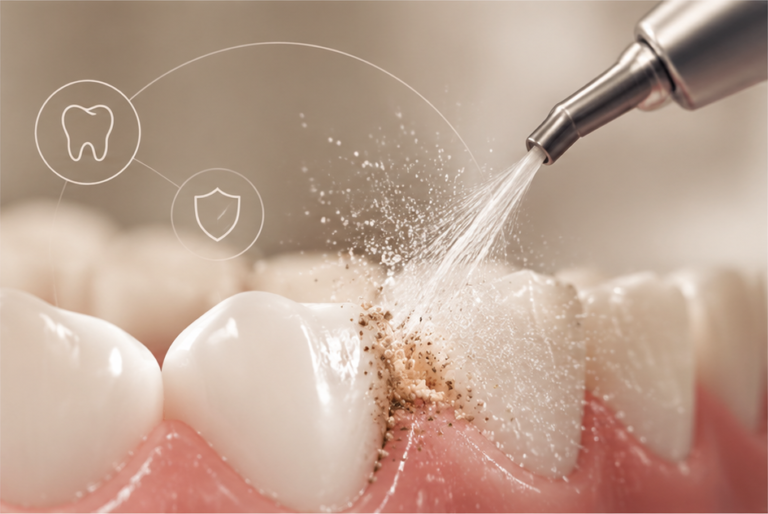
One of the techniques that can form part of the protocol is Airflow Dental Cleaning. It uses a controlled stream of air, water and fine powder to remove biofilm and certain external deposits from dental surfaces. It should not be confused with tooth whitening: its purpose is professional cleaning and biofilm management rather than changing the intrinsic natural colour of teeth.
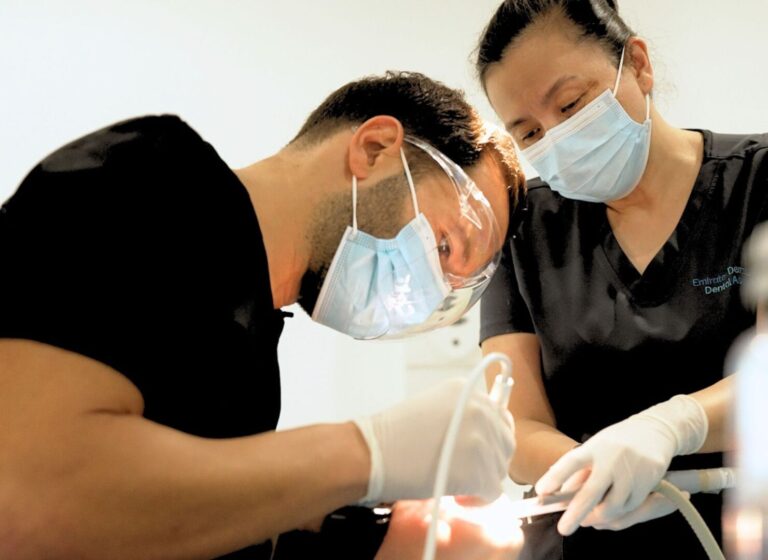
At Dr. Ali Khodr in Dubai, GBT and Airflow technology can be incorporated into professional hygiene according to individual clinical needs. Other instruments may still be required when mineralised deposits are present. No single technology replaces a complete dental assessment, because professional hygiene needs to consider the amount and location of deposits, gum condition, restorations, implants and the patient’s individual periodontal situation.
What are Gingivitis and Periodontitis?
Gingivitis is inflammation affecting the gums and is commonly associated with bacterial plaque accumulation. Patients may notice redness, swelling or Bleeding Gums, particularly during brushing or interdental cleaning. Bleeding should not simply be accepted as normal, nor should patients automatically stop cleaning the area because they see blood.
Periodontitis is different because the disease affects deeper structures supporting the teeth. It can be associated with progressive loss of periodontal attachment and supporting bone. Possible signs can include bleeding, gum recession, changes around the gumline, persistent bad breath or tooth mobility, although periodontal disease can sometimes progress without significant discomfort.
The broader term Periodontal Disease includes conditions involving the gums and supporting structures. Distinguishing between gingivitis and periodontitis requires professional evaluation rather than self-diagnosis from symptoms or photographs. This distinction matters because the appropriate management depends on which tissues are affected and to what extent, making periodontal assessment an important part of oral prevention.
What are Periodontal Pockets and how are they evaluated?
In a healthy mouth, the gum sits closely around each tooth. When periodontal tissues are affected, a deeper space can develop between the tooth and surrounding gum. This is known as a Periodontal Pocket, and it can create an environment where bacterial biofilm and deposits accumulate below the gumline.
Because these spaces cannot be accurately assessed simply by looking at the gums, the dentist can perform Periodontal Probing. A thin calibrated instrument is gently positioned between the tooth and gum to measure the depth at different points. These measurements can be considered alongside bleeding, gum condition, tooth mobility and diagnostic imaging when clinically necessary.
The presence of a periodontal pocket does not mean patients should attempt to clean deeply beneath the gum with improvised instruments. This may traumatise the tissues without treating the underlying condition. Periodontal measurements provide clinical information, allowing changes to be monitored and helping determine whether professional hygiene, periodontal treatment or subsequent maintenance may be appropriate.
What is the difference between Scaling and Root Planing?
Professional dental cleaning can involve different procedures depending on where deposits are located and whether periodontal disease is present. Scaling refers to the professional removal of plaque, tartar and other deposits from dental surfaces using appropriate instruments. It may be performed with ultrasonic devices, manual instruments or a combination of techniques according to clinical requirements.
Root Planing is associated with periodontal treatment when areas below the gumline and root surfaces require more extensive management. It should therefore not be considered an automatic part of every professional hygiene appointment. A patient with healthy gums and superficial deposits has different clinical needs from someone with deeper periodontal involvement.
The distinction is important because online descriptions sometimes use terms such as “deep cleaning” without explaining what the treatment actually involves. At Dr. Ali Khodr in Dubai, the type of professional care depends on the patient’s periodontal condition rather than applying the same procedure routinely. Diagnosis determines the treatment, while subsequent prevention helps control the factors that contribute to renewed bacterial accumulation.
Why are Interdental Cleaning and daily prevention important?
A toothbrush remains fundamental for daily oral hygiene, but it cannot always reach the surfaces between neighbouring teeth effectively. Interdental Cleaning focuses specifically on these spaces and can involve different tools depending on their dimensions, tooth position and the presence of restorations or implants.
The appropriate method is not necessarily identical for every patient. Interdental brushes may be useful in certain spaces, while dental floss or another technique may be appropriate elsewhere. Patients with periodontal problems can have different interdental anatomy from those with healthy gums, which is why personalised instruction can improve the effectiveness of home care.
Brushing technique is equally important. Excessive pressure does not automatically remove more plaque and can unnecessarily irritate tissues. In some patients, traumatic brushing can also be one of several factors associated with Gum Recession, where the gum margin moves and exposes more of the tooth or root. Effective prevention should be thorough without being aggressive, combining correct brushing with appropriate interdental plaque control.
What is Gum Recession and why does it need professional assessment?
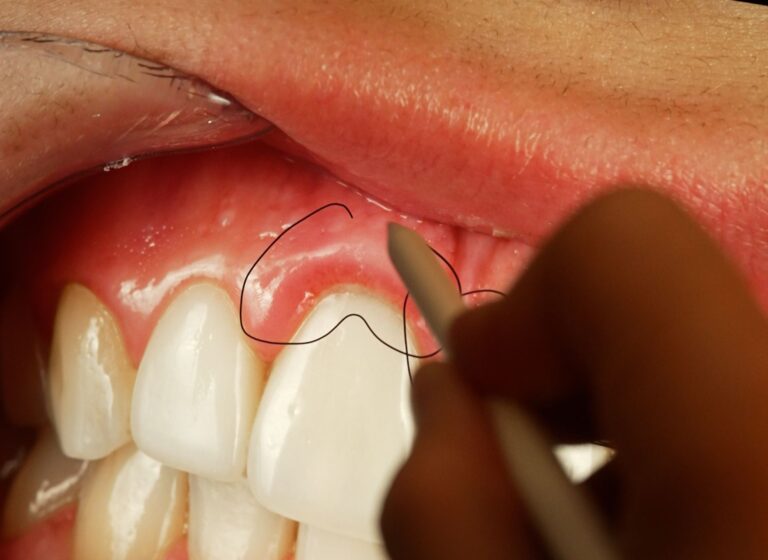
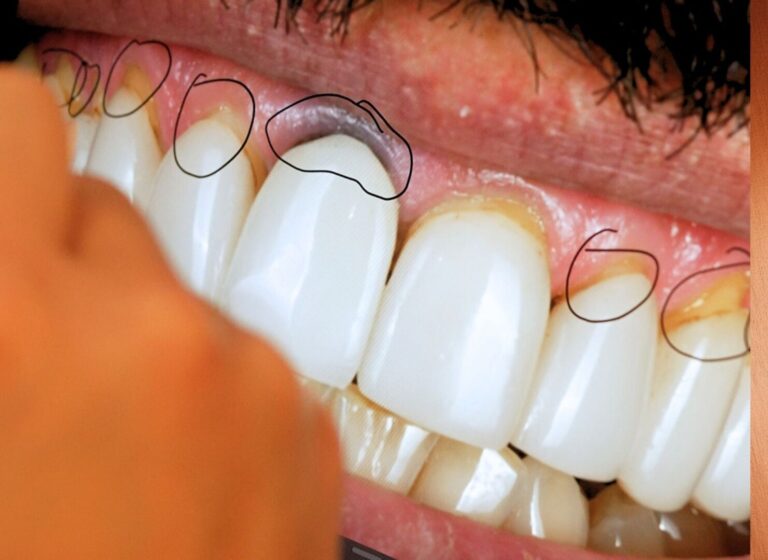
Gum Recession occurs when the position of the gum margin changes, making part of the root surface more visible. Patients may notice that a tooth appears longer than before or experience increased sensitivity, particularly with cold foods and drinks. However, recession does not have one single cause.
Periodontal disease, individual anatomy, tooth position and traumatic brushing habits are among the factors that may need to be evaluated. This is why switching randomly between harder toothbrushes, abrasive products or homemade treatments is unlikely to address the actual cause. In some situations, aggressive attempts to “clean better” can create additional irritation.
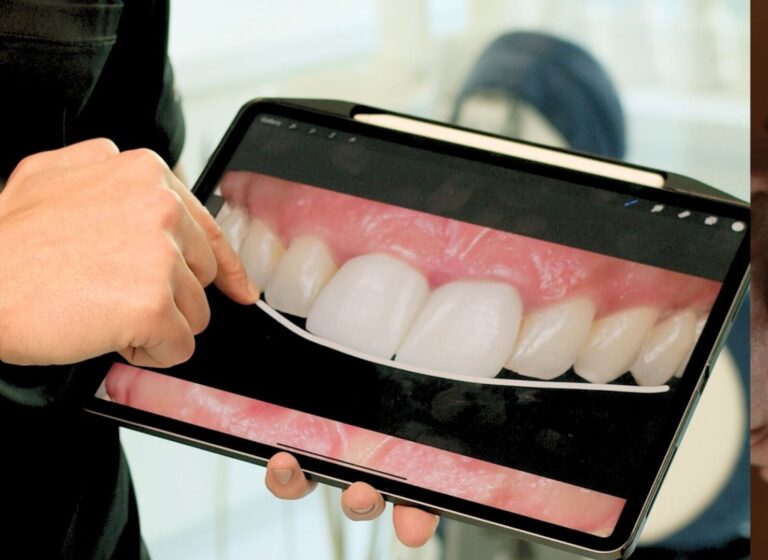
Assessment can determine whether recession is stable or associated with other periodontal findings and whether changes in oral hygiene or periodontal management should be considered. When appropriate in selected situations, Gum Contouring may also be discussed in dentistry to modify gum shape or level, but this is a different concept and should not be regarded as a DIY solution for recession. The health and characteristics of the periodontal tissues must always be evaluated first.
How does prevention change around dental implants?
Replacing a tooth with an implant does not eliminate the need for professional hygiene. Although an implant cannot develop a cavity in the same way as a natural tooth, bacterial biofilm can accumulate around the restoration and surrounding tissues. This makes daily cleaning and professional monitoring important.
Peri-implant Mucositis describes inflammation of the soft tissues around an implant. Possible signs can include redness, swelling or bleeding. Peri-implantitis is a different condition involving inflammation together with progressive loss of supporting bone around the implant. These conditions illustrate why artificial dental components still depend on healthy biological tissues.
Cleaning around implants may require techniques adapted to the shape of the restoration and the spaces surrounding it. Patients should avoid attempting to clean deeply around an implant with sharp or improvised instruments. Implants require prevention just as natural teeth do, although their anatomy and biological relationship with surrounding tissues are different.
Why is Periodontal Maintenance part of long-term prevention?
When periodontal treatment has been completed and inflammation is under control, prevention does not stop. Periodontal Maintenance refers to ongoing professional care intended to monitor periodontal health and control bacterial deposits according to the patient’s individual needs.
Maintenance can include assessment of the gums, review of home hygiene, professional biofilm management and periodontal measurements where appropriate. The interval between appointments is not necessarily the same for every patient. Previous Periodontitis, periodontal pockets, plaque control, implants and other individual factors can influence the maintenance strategy.
This long-term approach is important because bacterial biofilm continually reforms. Treatment can manage an existing periodontal problem, but it cannot permanently prevent new plaque from developing. At Dr. Ali Khodr in Dubai, professional maintenance and daily home care work together, helping patients manage oral health through prevention rather than waiting for pain or visible changes before seeking assessment.
Dental Hygiene and Periodontology in Dubai: prevention starts with understanding oral health
Dental Hygiene and Periodontology in Dubai bring together several aspects of oral care, from controlling Dental Plaque, Dental Biofilm and Tartar to understanding conditions such as Gingivitis, Periodontitis, Peri-implant Mucositis and Peri-implantitis. Professional techniques including Guided Biofilm Therapy (GBT), Airflow Dental Cleaning, Scaling and, when clinically indicated, Root Planing have different roles within prevention and periodontal care.
Daily habits remain equally important. Correct brushing and Interdental Cleaning help control bacterial accumulation between professional appointments, while Periodontal Probing and Periodontal Maintenance allow the condition of supporting tissues to be followed over time. Symptoms such as Bleeding Gums or Gum Recession should be evaluated rather than treated through aggressive DIY techniques.
At Dr. Ali Khodr, dental hygiene, prevention and periodontology are approached as connected areas of oral health rather than isolated procedures. For patients in Dubai, understanding these terms makes it easier to recognise how daily prevention, professional hygiene and periodontal monitoring complement one another in maintaining healthy teeth, gums and supporting tissues over time.