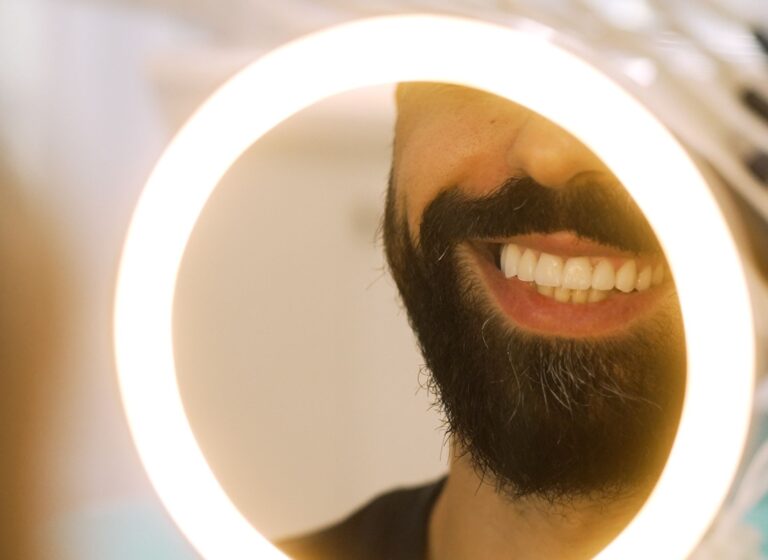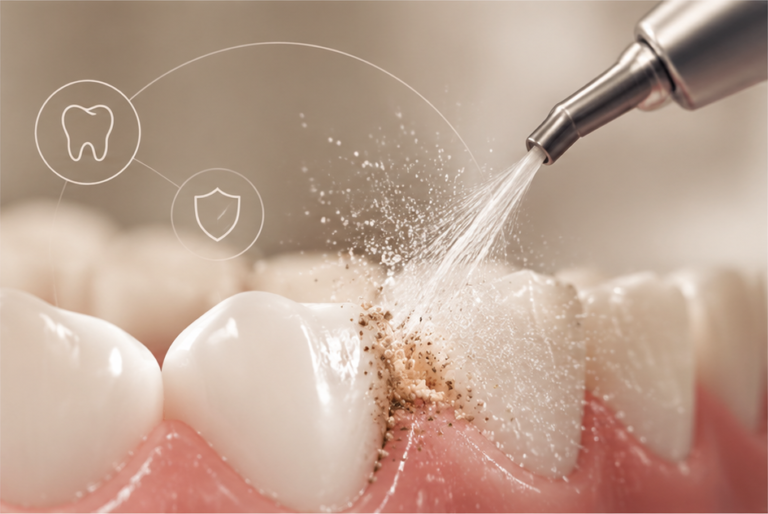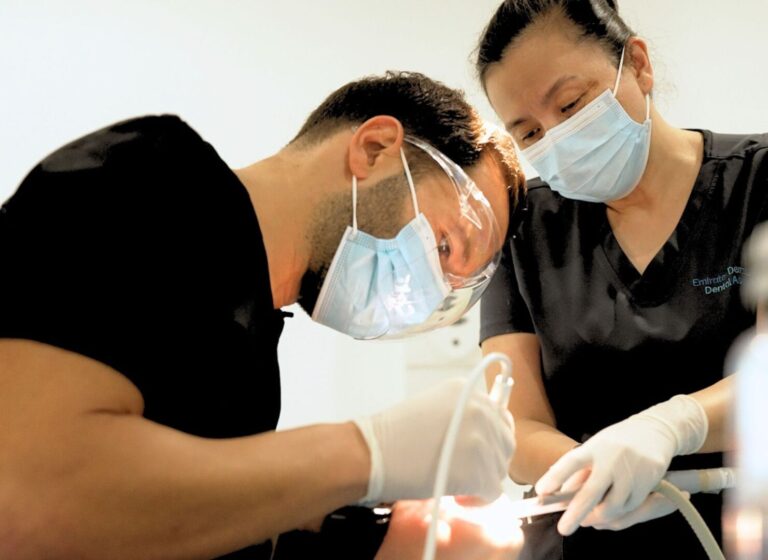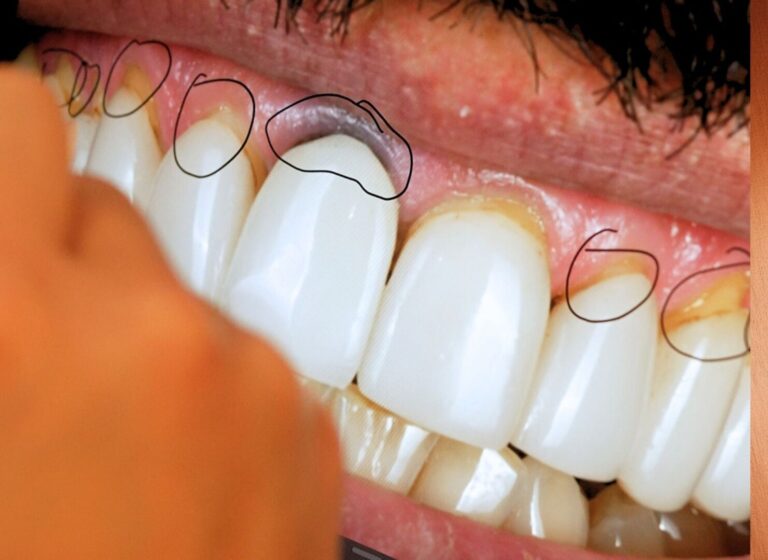
Modern aesthetic dentistry is no longer focused exclusively on achieving whiter teeth. It considers the smile as a whole, examining tooth colour, shape, proportions, gums and facial harmony before deciding whether treatment is necessary and which approach may be appropriate. At Dr. Ali Khodr in Dubai, this philosophy is applied through personalised planning that combines aesthetic objectives with attention to the health of natural teeth and surrounding tissues. The aim is not to reproduce the same smile for every patient, but to understand which characteristics can be improved while respecting individual anatomy.
For patients exploring Cosmetic Dentistry in Dubai, the terminology can sometimes be confusing. Dental Veneers, crowns, ceramic restorations and digital smile planning are often discussed together, even though they perform different functions and are not interchangeable. Understanding the main concepts behind contemporary cosmetic dentistry can make it easier to see how an aesthetic treatment develops, from the initial analysis of the smile to the selection and creation of a restoration.
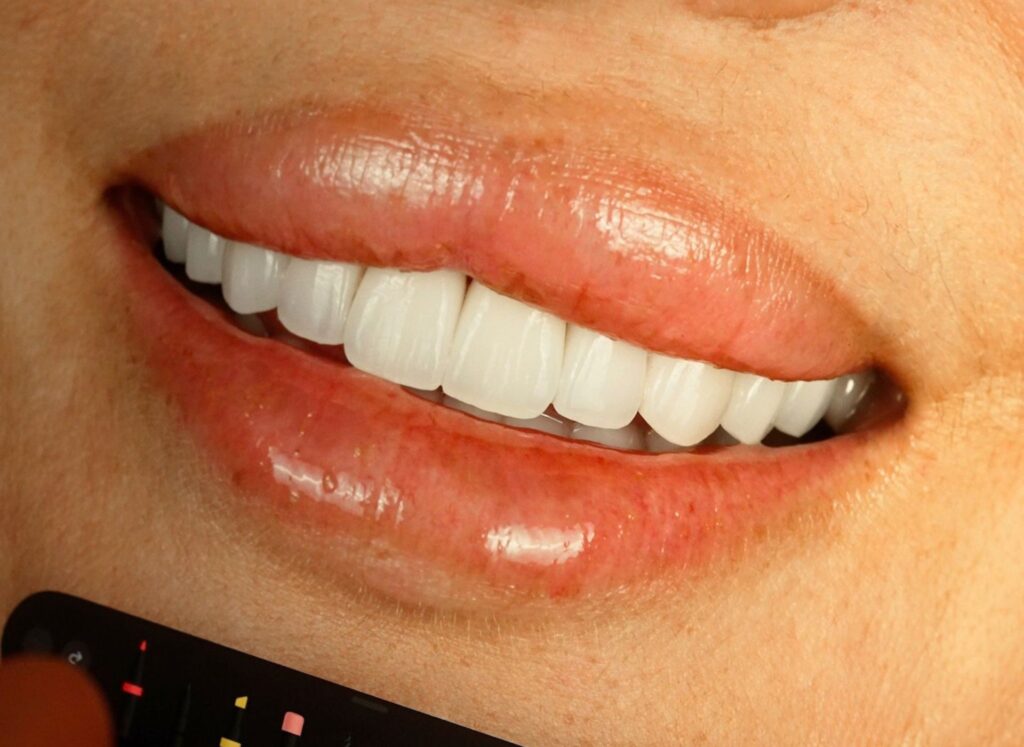
What does Cosmetic Dentistry in Dubai include?
Cosmetic dentistry includes a range of procedures intended to improve aspects of the smile while taking into account dental health and function. Depending on the patient’s starting situation, treatment may address tooth colour, shape, dimensions, alignment, worn areas, spaces or existing restorations. There is therefore no single procedure that can simply be defined as “cosmetic dentistry”.
Some patients may require only a limited intervention, while others present several characteristics that need to be evaluated together. Dental Veneers can modify the visible surface of selected teeth, for example, whereas a Dental Crown covers a greater portion of a tooth and may be considered when restorative requirements are more extensive. In other cases, aesthetic improvement may involve composite restorations, whitening or a broader prosthetic treatment.
This distinction is important because treatment should follow diagnosis rather than the other way around. A patient may initially request veneers after seeing a particular result online but discover that another approach better suits the condition of the natural teeth. At Dr. Ali Khodr in Dubai, preserving oral health remains part of aesthetic planning, so the choice of treatment considers teeth, gums and bite as well as the desired appearance.
How is a new smile planned?
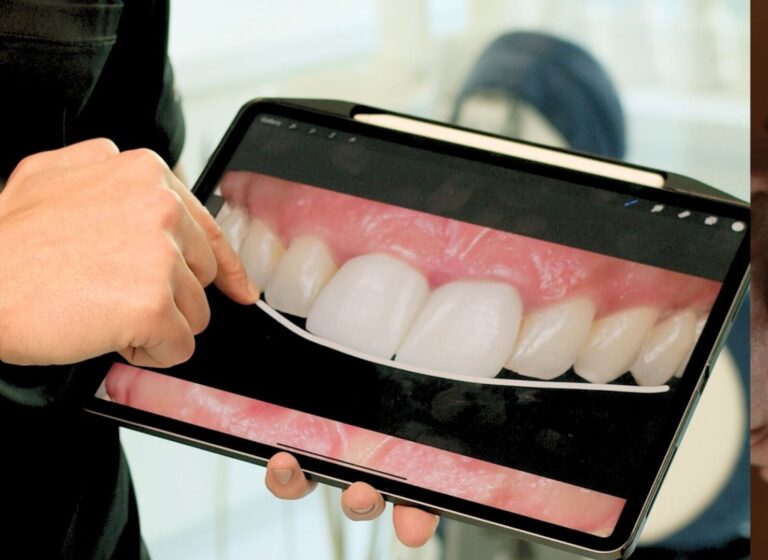
Before considering individual restorations, aesthetic dentistry can begin with Smile Design: an analysis of the characteristics that determine how the teeth appear within the smile and face. Colour is only one of these elements. Tooth dimensions, contours, gum levels, lip movement and the amount of tooth visible when smiling can all influence the final appearance.
The Smile Line is one of the relationships considered during this process. It describes how the upper teeth interact visually with the lower lip and how much gum is displayed when smiling. At the same time, Tooth Shape and Tooth Proportions help determine whether individual teeth appear balanced with one another. A tooth can be healthy and well positioned yet still appear too short, narrow or differently shaped in relation to neighbouring teeth.
These characteristics should not be interpreted through rigid aesthetic formulas. Natural smiles contain small differences, and perfect symmetry is not necessarily the objective. A personalised smile should relate to the individual face, which is why simply choosing another person’s teeth from a photograph cannot replace proper aesthetic planning.
What is the role of Digital Smile Design?
Digital Smile Design can support the planning process by using photographs, digital scans and clinical information to study potential modifications before definitive treatment. It allows characteristics such as tooth length, contours and proportions to be evaluated within the wider smile rather than concentrating on a single tooth.
Digital planning can also improve communication. Patients do not always have the technical vocabulary to explain why they are dissatisfied with their smile. They may simply feel that their teeth are too small, irregular or visually unbalanced. A digital analysis can help translate these perceptions into specific elements that the dentist can evaluate clinically.
In some cases, a Mock-Up can provide an additional representation of proposed changes. It may allow aspects such as tooth length and general shape to be assessed before definitive restorations are completed. Neither a digital simulation nor a mock-up should be considered an automatic prediction of the final result, however. Technology supports clinical planning rather than replacing it, and the feasibility of treatment still depends on the patient’s teeth, gums, bite and available dental structure.
What are Dental Veneers and when can they be considered?
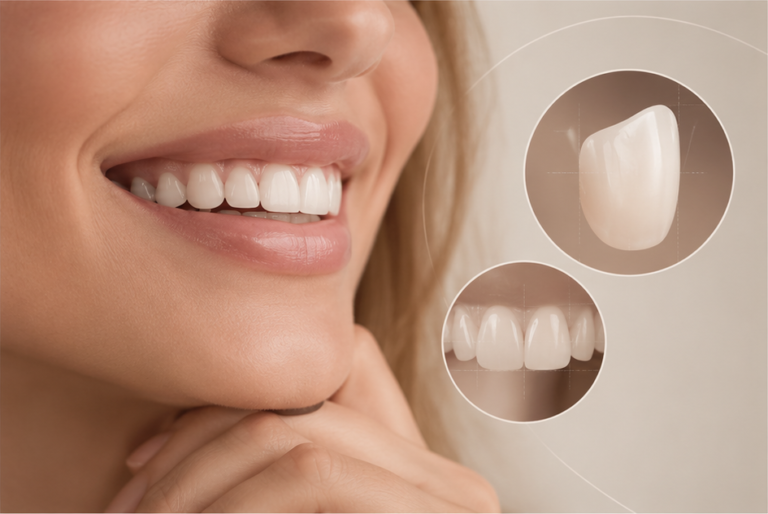
Dental Veneers are thin restorations applied to the visible front surface of selected teeth. They may be considered when the objective is to modify characteristics such as colour, shape, proportions, small spaces or certain aesthetic irregularities. Their suitability depends on the individual tooth and cannot be established simply from photographs.
There are also different approaches to veneer treatment. Porcelain Veneers use ceramic materials capable of reproducing visual characteristics such as translucency and surface texture. Composite Veneers, on the other hand, use tooth-coloured composite material that can be shaped to modify selected aesthetic characteristics. These alternatives have different properties and indications, making professional assessment important when determining which option, if any, is appropriate.
Another important concept is Tooth Preparation. The amount of natural dental structure involved can vary according to tooth position, existing anatomy, material and the changes being planned. For this reason, claims that every veneer requires extensive tooth reduction—or that veneers never require preparation—oversimplify the subject. The approach should be determined by the individual clinical situation with preservation of healthy dental structure considered whenever possible.
How are Tooth Shade and Dental Ceramic selected?
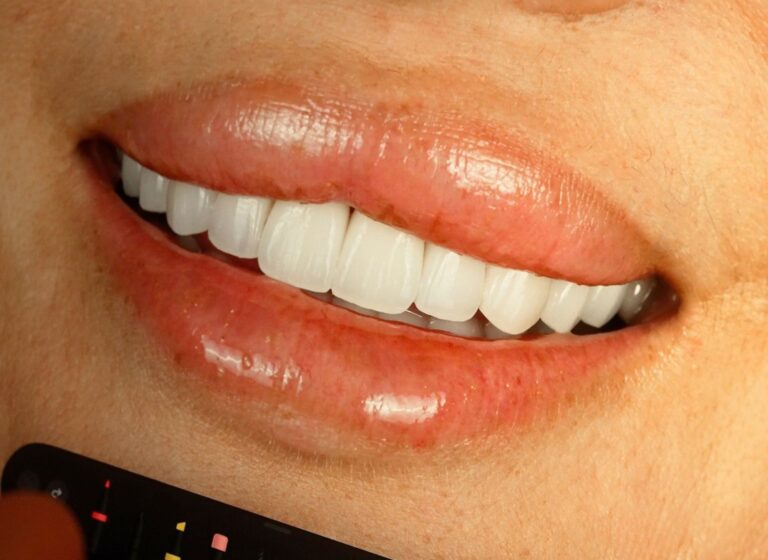
Patients considering aesthetic treatment often focus strongly on colour. Tooth Shade, however, is more complex than selecting the whitest possible option. Natural teeth contain variations in brightness, translucency and saturation, while lighting conditions and surrounding teeth can influence how a colour is perceived.
The same principle applies to Dental Ceramic, a category of materials used for restorations including veneers and crowns. Different ceramics have different optical and physical characteristics, meaning that material selection should consider both aesthetics and the clinical requirements of the restoration. Position in the mouth, restoration thickness, underlying tooth colour and bite forces can all influence planning.
The objective is therefore not necessarily to make every restoration identical or extremely bright. Natural-looking aesthetics often depend on controlled variations in colour, translucency, contours and surface characteristics. This is also why selecting a shade exclusively from photographs or filtered social-media images can be misleading. Colour needs to be evaluated as one component of the complete smile rather than as an isolated decision.
What is the difference between veneers, crowns and aesthetic prosthodontics?
Although veneers and crowns can both contribute to the appearance of a smile, they are different restorations. A veneer generally modifies primarily the visible surface of a tooth, whereas a Dental Crown surrounds a greater portion of it. When ceramic materials are used, a Ceramic Crown can combine restorative requirements with careful attention to the appearance of the tooth.
When treatment involves more complex restoration or replacement of teeth, Aesthetic Prosthodontics becomes particularly relevant. This field considers how prosthetic restorations can restore dental structures while integrating with the smile. Depending on the clinical situation, this may involve crowns, bridges or other forms of Dental Prosthesis.
A Dental Bridge, for example, can be used in selected cases to replace one or more missing teeth by connecting the replacement to supporting structures. The appropriate solution depends on the condition of the mouth and cannot be selected on aesthetics alone. Function and appearance need to be planned together, particularly when several teeth or different types of restorations are involved.
Why is the Dental Laboratory important in cosmetic dentistry?
Many aesthetic restorations are the result of collaboration between clinical dentistry and dental technology. The Dental Laboratory is responsible for creating customised restorations based on the clinical plan and information provided by the dentist. This can include veneers, crowns, bridges and other prosthetic components.
The work involves more than reproducing a selected tooth colour. Shape, proportions, surface texture, translucency and the relationship between neighbouring restorations can all influence the final appearance. The dental technician therefore translates clinical and aesthetic information into the physical restoration, while the dentist remains responsible for diagnosis, treatment planning and its placement in the mouth.
Dr. Ali Khodr works in collaboration with an in-house dental laboratory, allowing the clinical and technical stages of aesthetic restorations to remain closely connected. This relationship can be particularly useful when several characteristics must be coordinated within the same smile. Digital planning, clinical assessment and laboratory execution are complementary stages of the same personalised restorative process.
What happens between planning and the definitive aesthetic result?
Aesthetic treatment often involves several stages rather than moving directly from consultation to the definitive restoration. After assessment and planning, the teeth may need to be prepared according to the selected treatment. When veneer treatment requires an intermediate phase, Temporary Veneers may sometimes be used before definitive restorations are placed.
Temporary restorations can protect prepared teeth and provide useful information about aspects of the planned smile, including general shape and length. However, they should not be expected to reproduce exactly the optical and surface properties of definitive ceramic restorations. Their role is provisional and forms part of the wider treatment process.
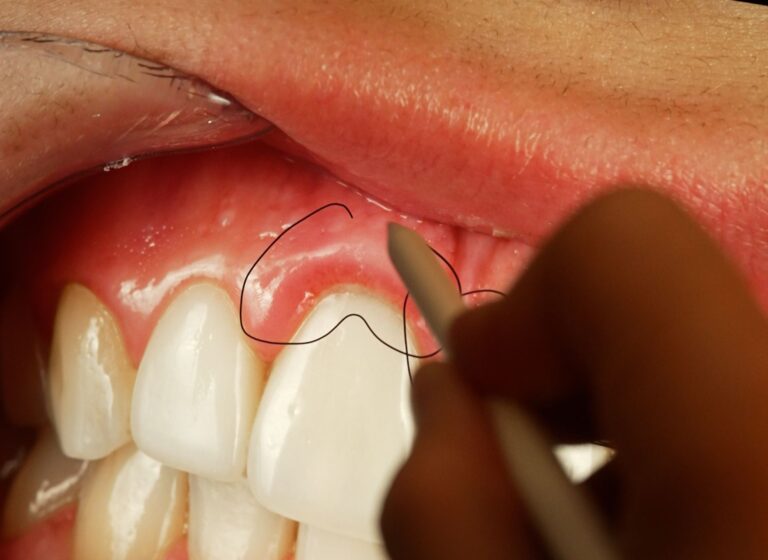
Precision remains important when definitive restorations are placed. With veneers, for example, the Veneer Margin is the area where the restoration meets the natural tooth. This relationship can influence both aesthetics and the surrounding gum tissues, which is why home attempts to polish or alter a restoration should be avoided. Any unexpected change in a veneer or crown should be professionally evaluated rather than corrected using abrasive products, adhesives or DIY instruments.
Why does cosmetic dentistry need to consider oral health?
Aesthetic treatment is most meaningful when it is planned on healthy biological foundations. A perfectly designed restoration cannot make gum inflammation, untreated decay or functional problems irrelevant. Before changing the visible appearance of the teeth, the condition of the mouth therefore needs to be understood.
This principle is particularly important with veneers and prosthetic restorations because natural teeth and gums continue to require care after treatment. A veneer does not make the underlying tooth immune to dental problems, just as a crown does not remove the need for plaque control around its margins. Aesthetic dentistry and prevention remain closely connected throughout the life of a restoration.
Patients should consequently avoid DIY veneers, tooth filing, abrasive polishing techniques or cosmetic products intended to alter restorations without dental supervision. These approaches cannot reproduce diagnosis, Smile Design, appropriate material selection or professional treatment planning. Improving a smile means understanding why a particular characteristic should be changed before deciding how to change it.
Cosmetic Dentistry in Dubai: understanding the complete aesthetic process
Cosmetic Dentistry in Dubai encompasses much more than veneers or tooth whitening. Contemporary aesthetic planning considers Smile Design, Tooth Shape, Tooth Proportions, Smile Line and Tooth Shade, while treatments can range from Dental Veneers and Composite Veneers to a Ceramic Crown, Dental Bridge or broader Aesthetic Prosthodontics according to individual clinical needs.
Technologies such as Digital Smile Design and planning tools such as a Mock-Up can help patients and dentists explore proposed changes, while Dental Ceramic and the work of the Dental Laboratory contribute to translating the treatment plan into personalised restorations. None of these elements works independently: the appropriate combination depends on the patient’s natural teeth, gums, bite and aesthetic objectives.
At Dr. Ali Khodr, cosmetic dentistry is approached by bringing these different aspects together rather than treating aesthetics as an isolated question of colour or symmetry. For patients in Dubai, understanding the terminology behind aesthetic dentistry can make the treatment process clearer and, above all, explain why a personalised smile begins with planning rather than with a predefined restoration.